
Cultural discussions often frame societies as either collectivistic, emphasizing family and community, or individualistic, emphasizing personal autonomy. Recent research suggests that many Latin American societies, including Mexico, combine both orientations, creating strong family bonds alongside independent identities (Krys et al., 2022; Soler-Anguiano et al., 2023). Within these family-centered communities, marriage is often celebrated as a lifelong commitment, and divorce can carry significant social stigma.
Growing up, I often heard the phrase échale ganas, which roughly translates to “give it your all.” Within many Latino families, this phrase is more than simple encouragement. It communicates support, resilience, and care. Sometimes that support is loud and proud. Other times, it is simply a nod or a smile from someone who believes in you. Either way, it reminds you that you are not facing life alone.
The pride of belonging to a culture that values family so deeply is immense. However, every culture has difficult conversations that are often avoided. In many Mexican families, divorce remains one of those topics. Although divorce has become more visible in Mexico in recent years, it is still often viewed as a sensitive or even taboo subject. My own experience challenged many of the assumptions I once had about what divorce means and what it does to families.
My Own Experience
I come from a loving family. Looking back, I do not believe my childhood memories were illusions. My parents genuinely loved one another. There was no infidelity, no hidden hostility, and no dramatic conflict. Like every couple, they had imperfections, but those imperfections did not define their relationship.
When I was sixteen, however, I began noticing subtle shifts in their relationship. They spent less time together, became more distant, and increasingly lived separate routines within the same household. Conversations that once felt effortless became strained, and the warmth I had always associated with their relationship slowly began to fade. Nothing dramatic happened overnight. Rather, the changes accumulated over four years until it became impossible to ignore that something had changed between them. My mom would return to her room soon after my dad arrived home from work. My dad spent more time away from home and often took projects that required him to travel. Over time, I found myself hearing more complaints about one parent from the other. Yet the change that hurt me most was surprisingly simple.
For as long as I could remember, going out to breakfast with both of my parents was routine. Eventually, that routine became deciding which parent I would spend the morning with. It felt like flipping a coin. I worried that whichever parent I chose, the other might feel rejected. I loved them both equally and never wanted either of them to think otherwise. All I could do was try to balance my time between them and hope I was not accidentally giving off the impression that I preferred one over the other.

For years, I felt anxious and confused. Deep down, I suspected their relationship was ending, even if nobody openly acknowledged it. I felt like it was only a matter of time before I joined the club of children whose divorced parents hated each other… or so I thought.
The truth finally appeared during the summer of 2025. I had gone with my mother to the salon where she worked for a haircut. There was no dramatic family meeting. There was no movie scene where both parents sat me down and carefully prepared me for the conversation. Instead, while I was getting my head washed, my mom simply told me that she and my father were no longer together. They had come to the realization that their relationship had fundamentally changed and that remaining romantic partners was no longer what either of them needed. Together, they made the difficult but mutual decision to move forward separately.
To be honest, I would not have had it any other way.
The Reality of Divorce
I could make this sappy and say the news crushed me, but I felt a surprising calm wash over me. Perhaps it was because I had spent four years watching the relationship slowly unravel. The announcement hurt, but it also confirmed what I had already suspected. More than anything, I felt prepared.
Research on divorce often focuses on children’s adjustment difficulties. While that focus is important, it can sometimes overshadow the diversity of children’s experiences and the role that parental communication plays in shaping those experiences. Dunn et al. (2001) found that many children reported receiving little explanation regarding their parents’ divorce, while only a small percentage felt fully informed and encouraged to ask questions. Kelly and Emery (2003) argue that children’s adjustment following divorce is shaped by both risk factors and protective factors, including the quality of parental communication. At the same time, children’s outcomes vary considerably and are influenced by factors such as parental conflict, parenting quality, and family resources (Amato, 2010). Together, these findings suggest that open communication can play an important role in helping children understand and adapt to major family transitions.
I consider myself fortunate. Although my own experience was largely positive, not all children adjust to divorce in the same way. Research suggests that children’s outcomes following divorce vary considerably and are influenced by factors such as parental conflict, the quality of parenting, and the resources available to families (Amato, 2010). Some research also suggests that parental divorce can shape how children approach their own future relationships and commitments in adulthood (Amato & Patterson, 2017). My parents trusted me enough to have an honest conversation about what was happening. They trusted me enough to explain why things had changed and what had led to their eventual separation. Rather than leaving me confused, they treated me as someone capable of understanding the situation.
As time passed, I noticed something I never expected. My parents seemed happier. My mom began spending time doing things she enjoyed and rediscovering parts of herself that had been overshadowed for years. My dad seemed less burdened by the tension that had slowly developed in the relationship. Most surprisingly, their relationship with one another actually improved.
When my mom eventually told me she had started talking to someone new, I found myself far more accepting than I ever expected. After meeting him, I realized that this was not a relationship born from infidelity or malice. That made all the difference. I can accept a lot of things, but cheating has always been a hard line for me. Seeing my mother happy made it much easier to support her moving forward. A few months later, during winter break, my parents and I sat down to openly discuss their separation. That conversation gave me the most important insight I have ever learned about divorce. There was no hatred between them. There was no pretending. They both insisted that the love they shared throughout their marriage had been genuine.
My mother summarized it with words that have stayed with me ever since:
“El amor no se ha desaparecido entre tu papá y yo, solo ha cambiado. Nada más.”
“The love between your father and me has not disappeared. It has only changed. Nothing more.”
That statement fundamentally changed how I thought about divorce.
When Marriage Ends but Care Remains
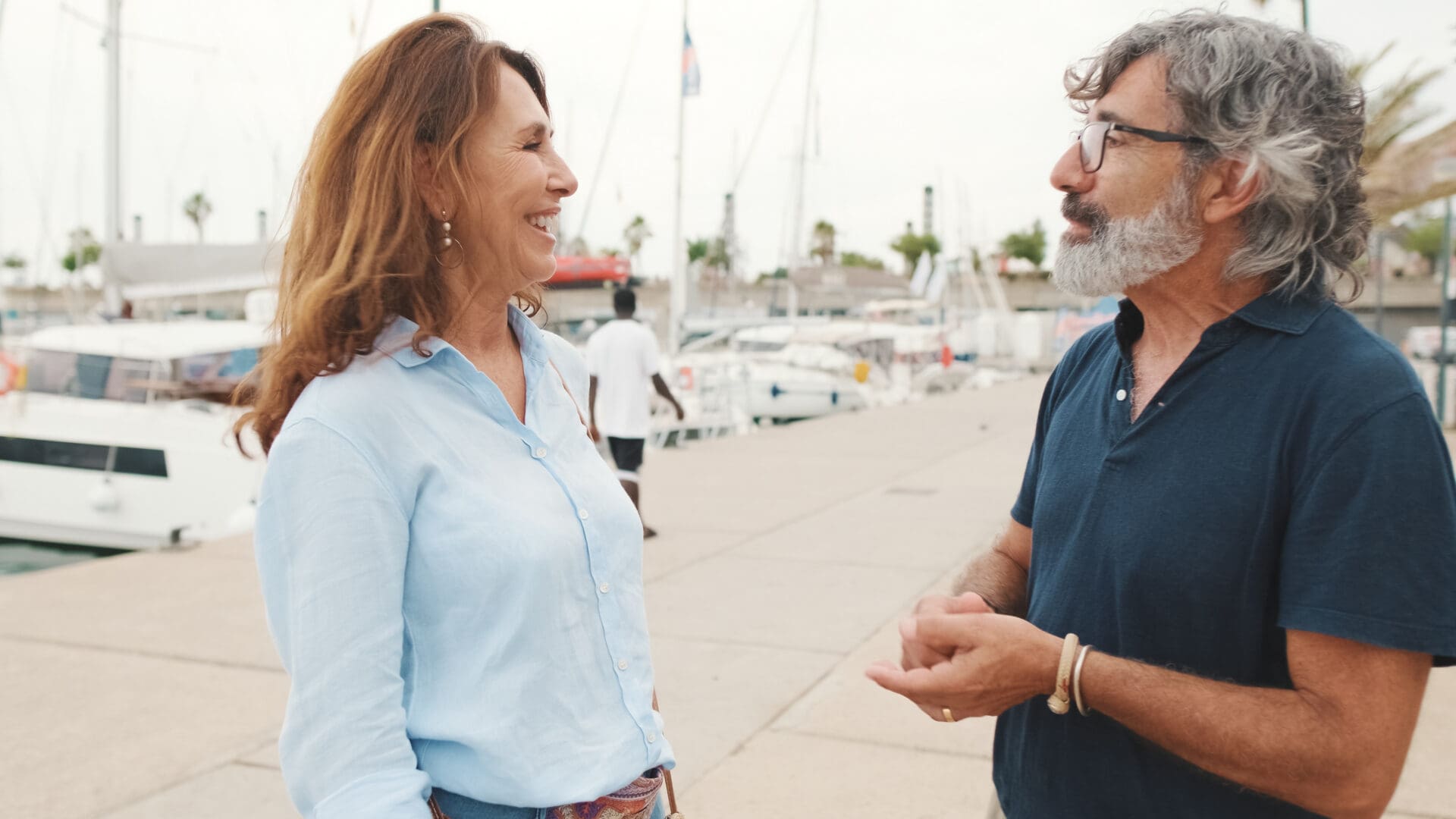
Research on marital resilience suggests that relationships are shaped by how people maintain meaningful connections over time (Canary et al., 2002; Amato & James, 2018). While many people assume that the end of a marriage automatically means the end of a relationship, research and personal experience both suggest that human connections are often more complicated. Some couples may no longer be compatible as romantic partners, yet they can continue to demonstrate care, respect, and commitment in other ways. In some cases, ending a marriage allows individuals to preserve the healthiest aspects of their relationship while letting go of the parts that no longer work.
What surprised me most was not that my parents got divorced. It was how much they still cared about each other afterward. Even after separating, they continued helping one another with errands, household responsibilities, and family obligations. My mother struggles with mobility issues due to nerve problems in her legs. My father built accessibility supports around the home to help her move safely. He still helps with repairs and projects whenever they are needed.
These actions may not reflect romantic love in the traditional sense, but they absolutely reflect care, respect, and commitment. Too often, divorce is portrayed as a complete collapse of a relationship. My parents’ experience demonstrated something far more complicated. While the marriage ended, their concern for one another remained.
Religion, El Chisme, and Divorce
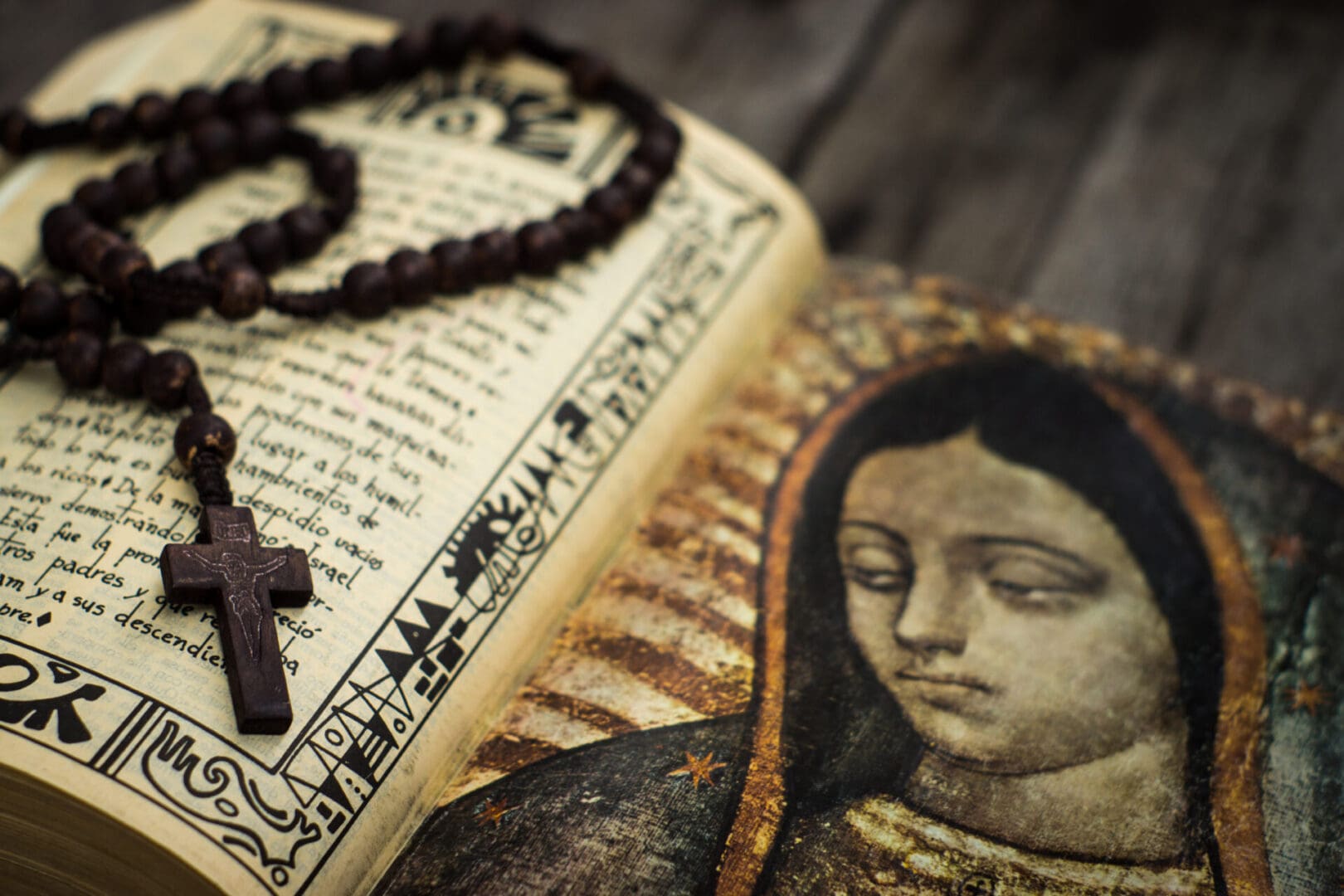
Part of understanding divorce within Mexican culture means understanding the role of religion. Catholicism has played a major role in Mexico’s cultural development and continues to influence how many families think about marriage. Marriage is often viewed as a sacred covenant designed to last a lifetime. As a result, divorce can carry a great deal of social and moral stigma. Research generally finds that greater religious involvement is associated with lower rates of divorce, although the relationship varies across traditions and communities (Pew Research Center, 2025).
Another factor is el chisme, or gossip. Now, I cannot sit here and pretend I have never participated in a little bit of chisme. Most of us have. It is part of life and, in many ways, part of how communities stay connected. However, gossip also has a darker side. Following a separation, people speculate. They assign blame. They fill in gaps with assumptions. Sometimes a single detail becomes an entire story. In communities where family, religion, and tradition are highly valued, that scrutiny can make divorce even more difficult.
At the same time, chisme is not always harmful. Scholars have argued that it can help communities discuss difficult experiences, challenge harmful norms, and process collective struggles (Nuñez et al., 2024). Like many cultural traditions, it depends on how it is used.
 The Pushback
Not everyone supported my parents’ decision. My grandmother, a deeply religious Mexican woman raised in a much more traditional era, struggled to accept the separation. To her, marriage was a lifelong obligation. Divorce was not something she believed in, regardless of the circumstances.
Learning that some of her comments had been directed toward my mother’s separation and subsequent relationship was difficult to hear. At the same time, I understood where those beliefs came from. They were shaped by a different generation, different cultural expectations, and different life experiences. What surprised me most, however, was how supportive the rest of my family was. Most recognized that my mother’s well-being mattered and that the decision ultimately belonged to her.
Their reactions reminded me that culture is never static. Even within the same family, people negotiate tradition, religion, and personal experience in very different ways. While some relatives viewed the divorce through the lens of lifelong marital obligation, others prioritized my mother’s happiness and well-being.
Love Changing Form
I ultimately do not view my parents’ separation with sadness. I view it as love changing form. The romantic relationship ended, but the respect, support, and commitment they showed to one another continued in a different way. They still care for one another. They still help one another. They still work together to support me through college. They are still invested in each other’s well-being even though they are no longer together romantically.
Despite the pushback that sometimes comes from family traditions, religious beliefs, and community expectations, I do not view my parents’ separation as a tragedy. Their story taught me something far more complicated and, in many ways, far more hopeful.
Ultimately, my parents’ separation taught me that love does not always disappear when a marriage ends. Sometimes love changes form. My parents are no longer romantic partners, but they continue to support one another, care for each other’s well-being, and work together to support their family. In a culture where divorce is often viewed through the lens of failure, conflict, or shame, their story reminds me that endings can also be acts of honesty, respect, and compassion.
The marriage ended, but the care did not.
References
- Amato, P. R. (2010). Research on divorce: Continuing trends and new developments. Journal of Marriage and Family, 72(3), 650–666.
- Amato, P. R., & Patterson, S. E. (2017). The intergenerational transmission of union instability in early adulthood. Journal of Marriage and Family, 79(3), 723–738.
- Amato, P. R., & James, S. L. (2018). Changes in spousal relationships over the marital life course. In D. F. Alwin, D. H. Felmlee, & D. A. Kreager (Eds.), Social networks and the life course: Integrating the development of human lives and social relational networks (pp. 139-158). Springer.
- Canary, D. J., Stafford, L., & Semic, B. A. (2002). A panel study of the associations between maintenance strategies and relational characteristics. Journal of Marriage and Family, 64(2), 395-406.
- Dunn, J., Davies, L. C., O’Connor, T. G., & Sturgess, W. A. (2001). Family lives and friendships: The perspectives of children in step-, single-parent, and non-step families. Journal of Family Psychology, 15(2), 272-287.
- Javier, F., & Duke, M. R. (2010). Chisme y reputación: Soberanía y subjetividades rurales en la globalización. Estudios Sociológicos, 28(84), 729-752.
- Kelly, J. B., & Emery, R. E. (2003). Children’s adjustment following divorce: Risk and resilience perspectives. Family Relations, 52(4), 352-362.
- Krys, K., Vignoles, V. L., de Almeida, I., & Uchida, Y. (2022). Outside the “cultural binary”: Understanding why Latin American collectivist societies foster independent selves. Perspectives on Psychological Science, 17(4), 1166-1187.
- Liberman, D. E. (2019, June 28). Understanding the pros and cons of gossip. BELatina.
- Mexico News Daily Staff. (2023, September 27). Trouble in paradise: Divorces on the rise in Mexico. Mexico News Daily.
- Nuñez, I., Ybarra, M. G., Tissenbaum, C. D., & Acosta, B. (2024). Yo! Chisme is good! Latina/x girls’ cultivando confianza in an after-school program. Teachers College Record, 126(8), 3-31.
- Pew Research Center. (2025, February 26). Divorced/separated people.
- Soler-Anguiano, F. L., Rivera-Aragón, S., & Díaz-Loving, R. (2023). Cross-cultural measurement invariance evidence of individualism and collectivism: From the idiosyncratic to universal. Frontiers in Psychology, 14, Article 1150757.
Discover more from Decide To Commit
Subscribe to get the latest posts sent to your email.

Hello! My name is Jose Arturo Brito and I am a senior at Northern Illinois University and I am currently majoring in Psychology and working towards a minor in Counseling and Family and Child studies. After graduation I hope to go into grad school to make progress to my end goal career as a Marriage and Family Therapist.