
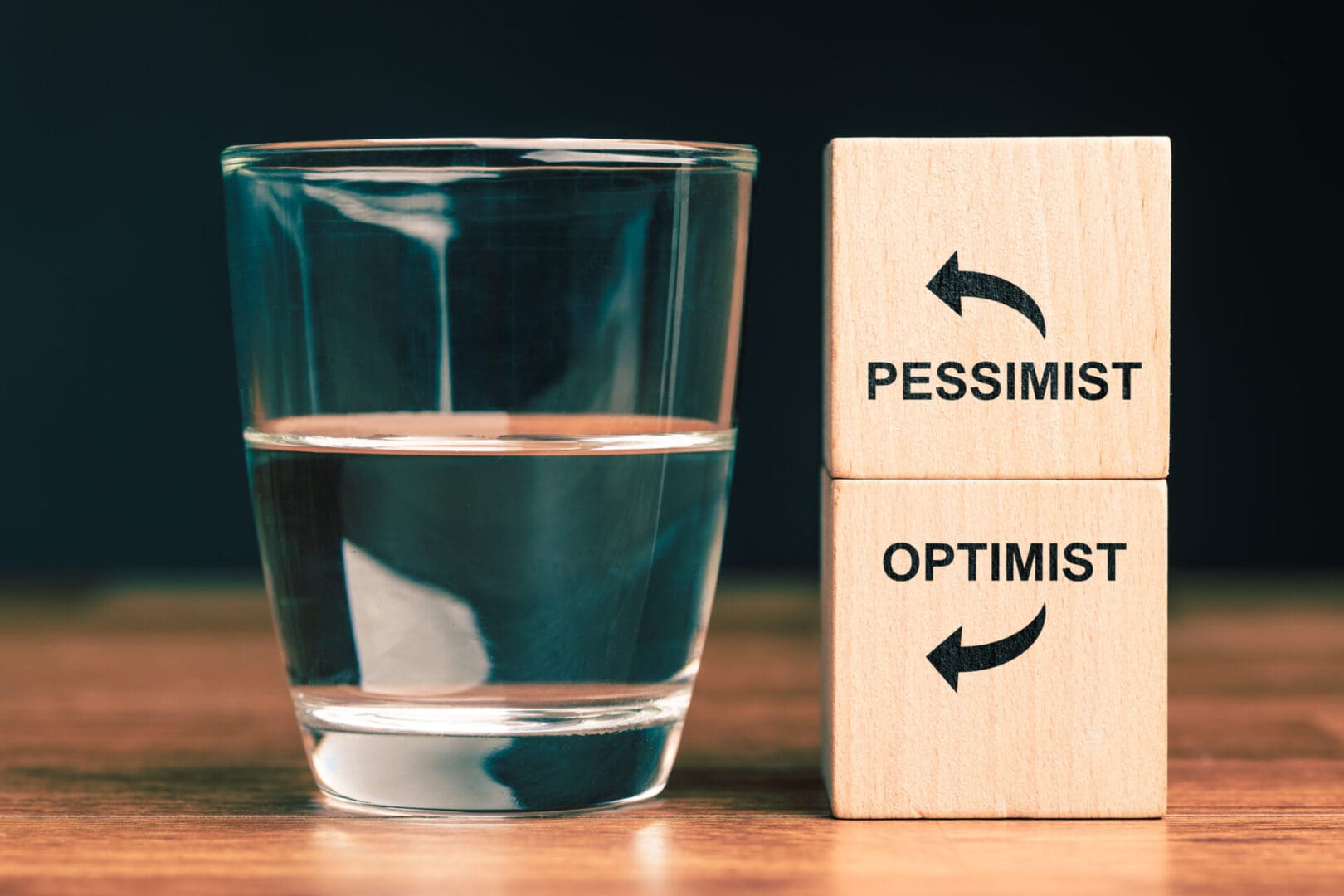
When the subject of optimism comes up, people tend to roll their eyes. It can seem like faux happiness, naiveté, or plain delusion. A mindset of sunshine and rainbows despite the bleakness of reality. Perhaps it brings to mind the “glass half full” comments, where things could always be worse, and there is a cheery spin to even the bleakest moments. Some think it is better to be a pessimist, to see the severity of a situation and anticipate the worst. It saves a person from disappointment if they expect the worse outcome. If you think this way, you’re not alone. 34% of people worldwide are pessimists (Perton, 2023).
However, contrary to popular belief, optimism is rooted in reality. It promotes rational thinking and accurate assessments of situations. This contrasts with pessimism, which can lead to catastrophizing and unnecessary panic. Another myth is that people who are pessimists cannot become optimists. This is not the case. Optimistic thinking can absolutely be learned, and adopting a positive explanatory style can increase performance in many areas of a person’s life. One of these areas is relationships. How can mindset make such a difference? How can you become more optimistic?
Explanatory Styles
A person’s explanatory style is the way in which they interpret situations (Seligman, 1992). Don’t know yours? I encourage you to take this Optimism Quiz to find out. In addition to assessing hope and optimism, it explores three key dimensions: permanence, pervasiveness, and personalization. These qualities shape how we respond to challenges, and in relationships, they influence how partners navigate conflict, disappointment, and emotional vulnerability.
Permanence refers to whether someone sees problems as temporary or lasting. A partner who believes “We always fight” may feel hopeless and disengaged, while one who thinks “We had a rough night” is more likely to repair and reconnect. Pervasiveness reflects whether someone views a setback as isolated or all-consuming. If one bad interaction leads to “Everything is falling apart,” it can erode trust and intimacy. Personalization involves whether someone blames themselves, their partner, or external factors. A person who internalizes every issue by thinking “It’s all my fault” may struggle with shame and self-worth, while someone who externalizes by saying “You’re the problem” may avoid accountability and stunt growth. Recognizing your explanatory style can help you shift toward more balanced and constructive interpretations, especially in moments of relational stress. This awareness creates space for empathy, repair, and resilience.
Permanence
Permanence is how long you believe the impact of an event will last. This applies to both positive and negative events. For negative events, pessimists see them as permanent while optimists see them as momentary. Here’s an example of this difference in thinking:
Scenario: You meet your partner’s parents for the first time, and it goes poorly. They don’t like you and disapprove of your relationship.
Pessimistic: I ruined my first impression. They can’t stand me and think I’m a bad choice for their child. They’ll always hate me and probably won’t even go to our wedding one day. They’ll never approve of me, and I’ll always have this conflict.
Optimistic: Okay, that was rough. They don’t like me. However, I could grow on them over time. I’m sure after a “getting to know you” period, they’ll get a better idea of who I am. This is just temporary, and they’ll warm up to me eventually.
It’s harder for people to move on from setbacks when they think it will haunt the relationship forever. People don’t see the possibility for change because any hurdle seems like an endless issue. It’s harder to see a brighter future because conflict seems never-ending. Optimists see hard times as temporary. This allows them to move on from struggles and have a positive outlook on their relationship’s future. The event is the same, but the mindset is what decides its impact.
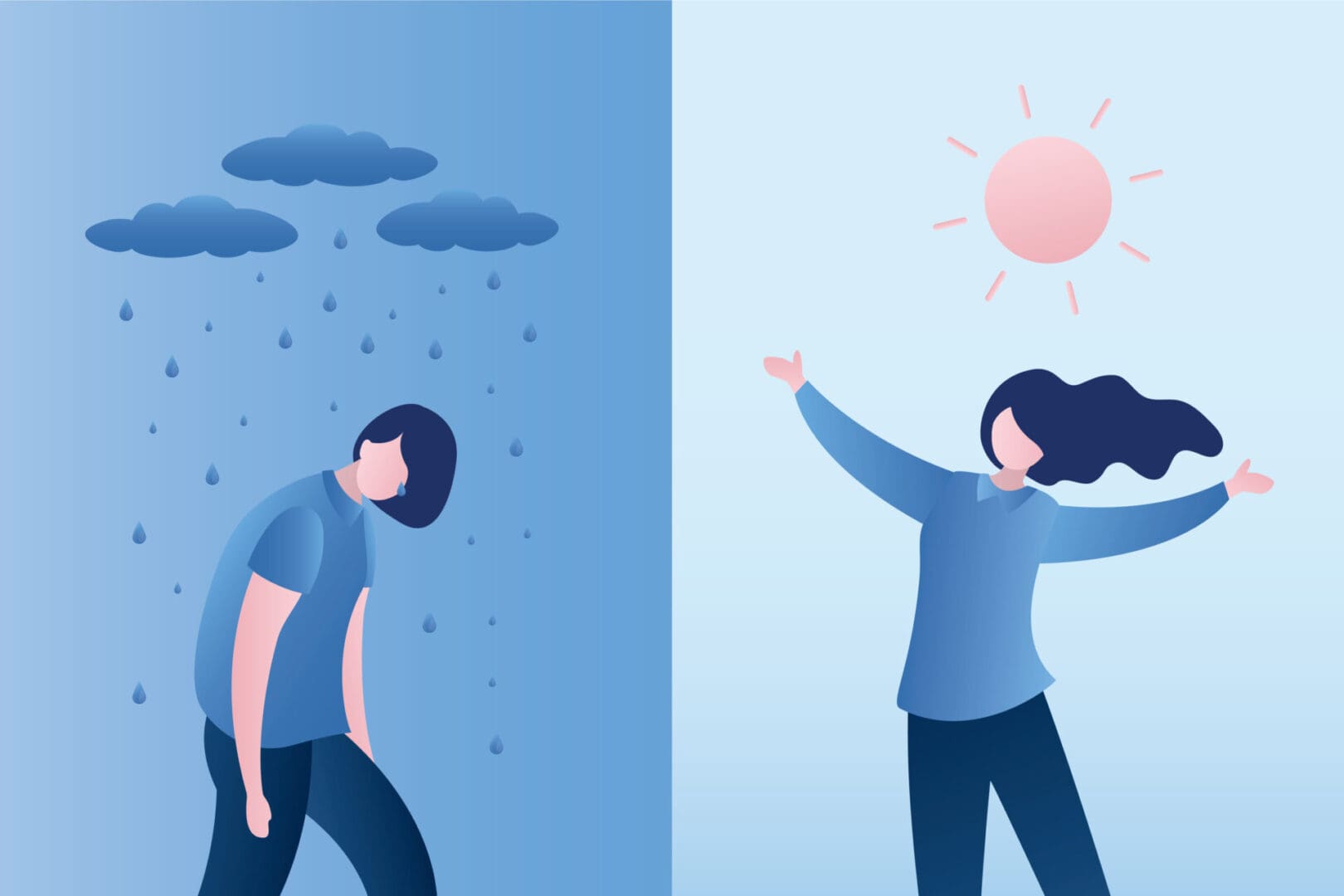
When it comes to positive events, things flip. Pessimists see good moments as fleeting while optimists see them as lasting. For example:
Scenario: You and your partner just moved in together. The place looks nice, and it suits you both perfectly. Moving all your stuff went smoothly, and you and your partner were working together as a team throughout the experience.
Pessimistic: Phew, today went really well. Soon we’ll have to deal with bills, chores, and bickering. This might be the last moment of peace before all the stress of living together kicks in.
Optimistic: That went great! I’m so glad we’re living together. Today has really shown how compatible we are. This is the start of something really special.
While the pessimist sees this day as a calm before the storm, the optimist sees it as demonstrative of the strength in their relationship. When a person doesn’t see joy as lasting, they are just waiting for the next bad thing to happen. An optimist can appreciate the moment and have a positive outlook on the relationship.
Pervasiveness
Pervasiveness is how issues affect other areas of life. Pessimists see any bad moment as a failure of their life overall. Optimists are able to acknowledge their faults while preserving their view of themselves and the wider situation. One example:
Scenario: You have a bad memory and completely forgot your plans to get dinner with your partner. They were left alone at the restaurant when you didn’t show up. This really upset them and they’re giving you the cold shoulder.
Pessimistic: I’m such a horrible partner. I clearly don’t appreciate them if I could forget something like this. Our whole relationship is clearly on the rocks for this to happen.
Optimistic: I feel awful. I have such a terrible memory, I forgot something important. Everything has been good with us, we love each other a lot. Our relationship is strong, I just need to be better at writing things down so I make it in the future.
Pessimists see each problem as something indicative of their life overall. They see good moments as compartmentalized, not giving the rest of their life a positive outlook. When something goes wrong, they don’t just feel like a failure in that area. They feel like a failure overall, seeing themselves as an awful partner. Compare this to the optimist. After the forgotten dinner, they will simply see themselves as a person with poor memory. They can separate the rest of their self-esteem from this weakness. They aren’t a bad partner, they’re just forgetful. One cloud doesn’t paint the whole sky gray. Instead of a devastating attack on who they are, they just become aware of one fault.
For good events, the opposite effect occurs. Pessimists see successes as separate from the rest of their lives. Optimists see positive moments as indicators of their strengths overall. For example:
Scenario: It’s your partner’s birthday. You got them a present, and they teared up over it. They loved it and said it was the perfect gift.
Pessimistic: I picked a really good gift.
Optimistic: I am a great gift giver.
For pessimists, successes are downplayed. They credit the gift for the joyful reaction instead of their consideration for the partner. It is specific to the moment rather than a pervasive positive quality. For an optimist, they would be proud of themself overall. They would feel like a considerate, thoughtful person. This win makes them feel like they are a good partner. This mindset allows grace for mistakes and pride for success.

Personalization
Personalization is how much personal responsibility you feel for something. Optimists tend to have high personalization for good events and low personalization for bad events. Pessimists are the opposite.
Scenario: Your partner just got back from work, and you got dressed up in hopes of being intimate tonight. You go to make a move, and they shoot you down, saying they aren’t in the mood.
Pessimistic: That’s so embarrassing. I got ready, and they still weren’t feeling it? They must not find me attractive anymore.
Optimistic: They must have had a long shift, they’ve been busy recently. I’m sure they’re just tired and not in the mood tonight.
With this rejection, the pessimist takes it personally. They think that the cause of this rejection is about them and their own flaws. It ignores other potential reasons their partner would want to skip tonight. An optimist would be able to separate themselves from this rejection. They would consider that their partner just worked a long shift, seemed tired, or just wasn’t feeling it. It acknowledges the outside factors coming into play. Personalizing every bad moment makes things much more hurtful than they actually are. It can lead to avoidable conflict and stress.
For positive events, it is the opposite. Pessimists do not personalize it, while optimists do. For example:
Scenario: You and your partner go out to the beach for the day and have a great time.
Pessimistic: The weather was great, and the beach was so empty. That made our day so fun.
Optimistic: I was extra charming at the beach today. We had such good banter, and it was a good pick of mine to go to the beach.
When something good happens, pessimists downplay their involvement. The pessimist credits circumstances outside of themselves for the nice day, and they don’t see their own positive impact. Compare this to the optimist, who feels good about themselves for planning a fun day and being enjoyable company. Being optimistic allows a person to give themselves credit for wins, boosting their self-esteem.
These three aspects of explanatory style refute the idea that pessimists are more grounded and realistic. Pessimism makes people assume the worst when that often isn’t the case. This leads to a feeling of hopelessness and discourages a person from working to change their situation (Seligman, 1992). Srivastava et al. (2006) found that optimistic men were more likely to still be in a relationship after a year than pessimistic men. Smith et al. (2013) found that optimists have higher marital quality and social support, making them more resilient. When you stay positive, it encourages a lasting partnership.
The ABC’s of Explanatory
Changing a negative explanatory style is important because mindset doesn’t just affect your thoughts; it leads to your actions. Assad et al. (2007) found that optimists have better problem-solving skills and higher satisfaction in their relationships. To describe this, Seligman (1992) works off of Albert Ellis’s ABCs: adversity, belief, and consequence. It is a way of showing how your assessment of a situation fuels your subsequent choices. Here’s an example:
Adversity: You snap at your date because you just got off an aggressive phone call with your mother.
Belief: I’m always snippy and mean.
Consequence: Gets depressed and doesn’t reach out to apologize.
Here’s a way a positive explanatory style could change that moment.
Adversity: You snap at your date because you just got off an aggressive phone call with your mother.
Belief: My mother really frustrates me and makes me snippy.
Consequence: Apologizes and explains.
When you have a positive thinking pattern, you don’t let every issue discourage you. Oftentimes, it leads to making counterproductive choices. I encourage you to try out this template with situations you find yourself in. Who are you assigning blame to? How is it impacting your decisions?
Look at the facts of bad things before you jump to conclusions. Argue with yourself, figure out if you’re letting emotions cloud your judgement. A lot of the time, the actual reality of a situation isn’t congruent with our catastrophized version. Optimism makes a person more emotionally intelligent (Glassie & Schutte, 2024). Here are some questions to ask yourself about the beliefs you have (Seligman, 1992).
- Evidence: Is it factually incorrect? What proof is there that the belief is accurate?
- Alternatives: What else could be true? Are there any causes you aren’t considering?
- Implications: If your belief is true, what does that mean? What bad could really come out of this? Are these bad results likely to happen?
- Usefulness: Is this helpful right now? Can I put this aside for later if it isn’t productive?
Beyond “Looking at the Bright Side”
I (Charlotte) used to think optimism was just a setup for disappointment. I was skeptical when I first started reading and researching for this post. But as I’ve worked to shift my explanatory style, I’ve noticed myself taking more risks and trying new things, not because I expect them to go perfectly, but because I know that even if they don’t, I’ll be okay. Failures aren’t permanent, and they don’t have to consume all my energy. A bad date doesn’t mean I’m destined to be alone. An argument with a friend doesn’t mean our bond is broken forever. This mindset has also made me more compassionate toward others. As a sensitive person, I used to internalize rejection or hurt as a reflection of me. Now, I can step back and recognize that people have stressors and struggles I may never see. Not every negative moment is personal, and giving space for that perspective has brought me clarity and peace.
Optimism, I’ve learned, isn’t about blind positivity or pretending everything is fine. It is a way of thinking that encourages growth, resilience, and realistic hope. It doesn’t erase hardship, but it keeps us from spiraling into worst-case scenarios. And it doesn’t require you to be the stereotypical “ray of sunshine” that people often imagine. Lord knows I’m not! What matters is practicing a mindset that sees setbacks as temporary, successes as meaningful, and relationships as capable of repair. Optimism is less about smiling through the storm and more about believing the storm will pass and that you will be stronger for having weathered it.
Try noticing your own explanatory style this week. When something goes wrong, pause and ask yourself: Am I treating this setback as permanent, pervasive, or personal? Then challenge that thought. Small shifts in perspective can open the door to a more optimistic, resilient way of living.
References
- Assad, K. K., Donnellan, M. B., & Conger, R. D. (2007). Optimism: an enduring resource for romantic relationships. Journal of personality and social psychology, 93(2), 285–297.
- Glassie, S. L., & Schutte, N. S. (2024). The relationship between emotional intelligence and optimism: A meta‐analysis. International Journal of Psychology, 59(3), 353–367.
- Perton, V. (2023, March 25). Dynata survey finds more optimists than pessimists for year ahead. The Centre for Optimism.
- Seligman, Martin E. P. Learned Optimism. Free Press, 1992.
- Smith, T. W., Ruiz, J. M., Cundiff, J. M., Baron, K. G., & Nealey-Moore, J. B. (2013). Optimism and Pessimism in Social Context: An Interpersonal Perspective on Resilience and Risk. Journal of research in personality, 47(5), 553–562.
- Srivastava, S., McGonigal, K. M., Richards, J. M., Butler, E. A., & Gross, J. J. (2006). Optimism in close relationships: How seeing things in a positive light makes them so. Journal of Personality and Social Psychology, 91(1), 143–153.
Discover more from Decide To Commit
Subscribe to get the latest posts sent to your email.

I am a Senior at Northern Illinois University. I’m majoring in Psychology with minors in Counseling and Human Development and Family Sciences. I am also a Community Advisor here at NIU.