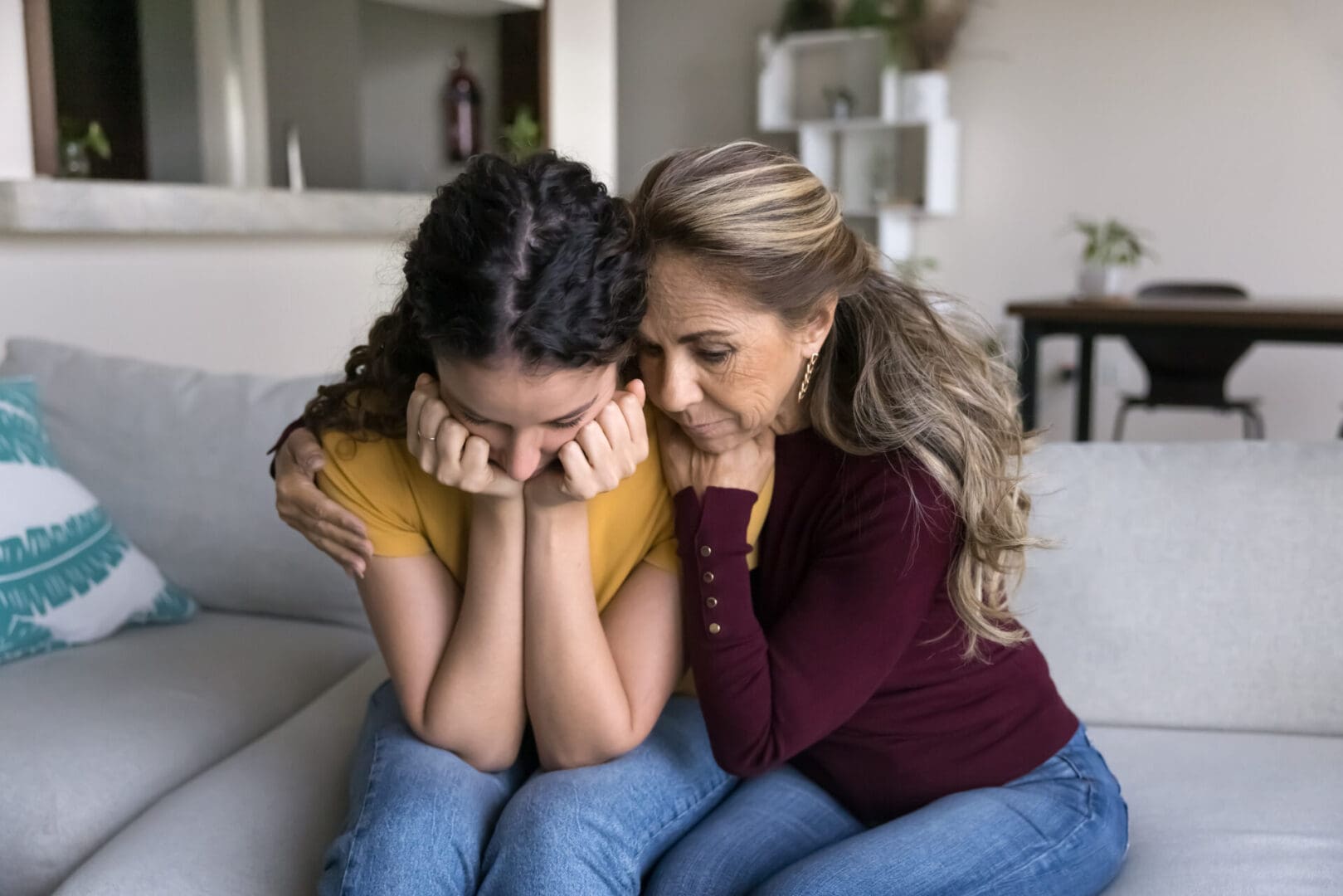
Grief can be difficult to understand, especially when emotions are colliding. Finding solace in grief begins with recognizing how unpredictable these emotions can be. You may be feeling angry about losing someone, you may be sad they are no longer with you, you may be feeling anxiety about what comes next, or you may be feeling many other things. Grief is not just a solitary ache—it’s a relational rupture. Whether mourning the death of a loved one, the loss of a romantic partner, or the unraveling of a friendship, grief reshapes our emotional landscapes and relational identities. For relationally oriented individuals, healing often depends not only on internal coping but on the capacity to reconnect, re-narrate, and re-commit (see Stanley, Rhoades, & Whitton, 2010).
The different relationships we create alongside the support we receive from our community can help us get through these hardships. While these relationships can be deeply comforting, they can also unintentionally add layers of complexity to our healing process. In order to truly move forward, it helps to understand what grief can look like beneath the surface. This post synthesizes recent research on grief and relationships, offering a framework grounded in relational resilience and attachment theory.
Understanding Grief as a Relational Process
Grief is often assumed to be a private experience, but in reality, it unfolds within family, friendships, partnerships, and broader cultural contexts. Family members are often primary sources of support, yet grieving alongside them can also be difficult. At times, loved ones may impose their own expectations—telling you that you are grieving “too much” or “too little.” While these comments are rarely meant to harm, they can feel invalidating and highlight the need to set boundaries, even with those closest to us. As Rosenblatt (2017) emphasizes, that grief cannot be reduced to a universal model; it is shaped by cultural meaning, relational expectations, and the depth of individual experience.
Friends also play a role, but their presence can vary. Some may avoid grief altogether because of their own discomfort, which does not necessarily mean they don’t care (Sturtevant, 2018). Deciding which friendships to lean on without pushing everyone away can be a delicate balance, as social connection is essential even when withdrawal feels easier. Johnsen and Tømmeraas (2022) echo this relational complexity, showing how the loss of a close friend can reshape emotional regulation and identity, particularly in young adulthood.
Romantic partners add another dimension. If a loss is shared, grief can deepen intimacy; if only one partner experiences it, grief can bring more challenges to a relationship and tensions around imbalance and misunderstanding may emerge (Sturtevant, 2018). Research by Russ et al. (2022) supports this, finding that adult attachment styles—especially anxious and avoidant orientations—predict vulnerabilities to complicated grief. These findings underscore how grief is not just an individual struggle but a relational process, influenced by the dynamics and boundaries we navigate with those closest to us.

Grief in Emerging Adulthood
Grieving at any age is a difficult process. However, grieving during emerging adulthood (18-29 years) can be especially difficult. But what does grief actually look like in everyday life? Here are just a few possibilities, although no two experiences are ever the same:
- Ending or falling out of a friendship
- Ending a romantic relationship
- Death of a loved one
- Loss or miscarriage of a child
- Partners being deployed
- Loss of career
- Major financial changes
- Loss of one’s identity
- Cultural grief
- Grieving future plans you once had
Emerging adulthood is a time where we are finding our identity and shaping the person we will become. A loss can be detrimental during this time and has potential to hinder people’s growth in certain mental and emotional areas. I (Natalie) have lost both of my grandmothers during this period of my life. I lost my first grandmother just before my 20th birthday to Alzheimer’s disease. This was a different kind of grief from what I have ever experienced. My grandmother had this disease for over 11 years, and over time she lost parts of herself. As her illness progressed, I was able to grieve different parts about her as they faded away, while still making new inside jokes and memories with her that I’ll have forever. But nothing could compare to when I finally lost her. There was something comforting about being able to see her and talk to her, and when that was gone, I didn’t know how to be “normal” again without her. I lost my dad’s mom last year, and this was more difficult in different ways. My grandma was sharp as a tack, witty, unbelievably caring, and so proud of her family until the end. Seeing my whole family gather around to support each other was an amazing experience that helped to keep her memory alive. One thing I know, both of my grandmas would want me to be happy and to keep living my life. I think this is what many of our loved ones would want for us after they’re no longer with us. It doesn’t make the loss any easier but knowing this can help us push through our grief and live in a way that would make our loved ones proud.
When putting grief in perspective, it is all about change and finding a new way of living despite the loss you are going through. Just because it is easy to put together that sentence, does not mean the process is easy. For most, the process is extremely difficult and gut wrenching. But that’s what it’s all about, especially for emerging adults. As it is, emerging adults are undergoing an immense amount of change throughout this time of their lives. When they are grieving something on top of all of this change, things can feel even more overwhelming. Grief is really all about changing and taking the power of how it affects us. We need to start thinking about how we can carry on the stories and legacies of our loved ones instead of letting the grief silence how we shape ourselves. How to recover from losing a job and losing a friendship instead of seeing them as personal failures. How to grow around grief and not just get over it.
The People Who Shape Our Healing
After we take time to grieve, often what helps many to begin healing is to turn to a partner or close family member for support. While nothing may compare to the feeling of loss, overtime being surrounded by people who care for you can start to help the feelings of grief seem smaller. Having those people who understand you is important when navigating grief. One of my (Natalie) best friends at my last school and I had a falling out towards the end of my time there. I was extremely hurt, upset, and confused about my feelings at the time. It really helped me to push forward after sharing that experience and talking about it with my partner. I was able to gain some outside perspective and although this didn’t do much to change the pain I was in, I was able to grieve the loss of this friendship faster than if I didn’t have any support from friends and family. Spending time with people who we are securely attached to is one way of finding solace in grief, because it reminds us that we are cared for and that happiness still exists after grief.
Unfortunately, due to the many ways that grief affects us, there’s potential for complications and conflict to arise in our relationships. When we grieve, it’s possible that sometimes we lose parts of ourselves. Until we recover these pieces, it may be hard to open up to loved ones about what’s going on. If your partner or loved one is grieving, it’s important to be patient with them and to be there for them when or if they’re ready to let you in. Here are some key strategies from Utah State University Extension’s guide on supporting a grieving partner:
💞 Supporting Your Partner Through Grief: Key Strategies
| Strategy | Description | Research Insight |
|---|---|---|
| Be Patient | Respect your partner’s unique grieving style. Avoid pushing them to talk or “move on.” Instead, ask what they need and give space. | Grief is nonlinear and varies widely across individuals (Sarper & Rodrigues, 2024). |
| Be Present | You don’t need perfect words—your presence matters. Silent companionship or gentle touch can be deeply comforting. | Supportive touch reduces emotional distress and fosters connection (Sahi et al., 2021). |
| Listen with Compassion | Use active listening: reflect, validate, and avoid fixing. Create emotional safety by showing you’re truly present. | Empathetic listening builds trust and strengthens bonds (Weger et al., 2014). |
| Offer Practical Help | Grief can make daily tasks overwhelming. Offer help with chores, childcare, or meals. Check in gently and adapt to changing needs. | Needs shift over time; flexible support is key (Stroebe et al., 2017). |
| Avoid Harmful Phrases | Refrain from saying “I know how you feel,” “At least…,” or “Everything happens for a reason.” These can feel dismissive. Focus on presence, not platitudes. | Validation is more healing than reframing or explanation (Sarper & Rodrigues, 2024). |
All types of grief affect each person differently. Some people may withdraw, some people may become more attached to their partners and seek more emotional support, and some may be somewhere in the middle. When grief causes us to close ourselves off, it’s important to know that being emotionally unavailable for too long can cause problems to arise in our relationships. Having open, honest communication and emotional connection with your partner is crucial to maintaining a lasting relationship.
The Many Languages of Grief
As mentioned before, everyone grieves differently. Some people find it helpful to mourn in the presence of loved ones, others find it better to work through grief on their own, in private. Gender, personality, and culture can all have a role in this.
Men and women have different expectations for how they “should” do many things in society, even how they grieve. Men are expected to keep their feelings to themselves and be “the strong link” through the grieving process. This type of grieving can lead to a person being unable to fully process their grief, by being unwilling to fully “feel” their grief and express it in healthy ways. Women are given more grace while grieving and are more likely to be open with their feelings while experiencing grief. Many times, women are more likely to seek support and show more emotion while processing grief (Leighty, 2025). Some ways this can be accomplished is through storytelling and remembrance of their loss. When I (Natalie) was grieving the loss of my grandparents I found telling stories and remembering the happy times with my loved ones helped me to share this experience with my family. It also helped me to open up to my friends and find more support from them during that time.
Although these are “expected” ways to grieve based on societal norms, there is no right way to grieve. No two people grieve the same, just like no two snowflakes are the same. The expectations for grief don’t require women to grieve in an emotional manner, some women may grieve quietly and that is okay! The same goes for when men grieve, if showing emotion and finding support helps, this is okay too. Similarly, a person who is more introverted may have trouble expressing their feeling to others surrounding their grief. However, extroverts may really benefit from expressing their feelings while grieving with others, such as attending support groups that allow them to interact and empathize with others who are going through similar situations. Whatever strategies help you when going through a loss is what should be done, regardless of anyone else’s expectations.
Grief can look different depending on a person’s culture, as well. In Japan, the people honor their ancestors’ spirits during the Obon Festival, by setting up lanterns outside their homes, altars to honor the dead. The three day festival concludes by releasing paper lanterns in rivers or oceans to guide the spirits of the deceased back to their ‘realm’. In Mexico, Dia De los Muertos is a holiday that honors the dead. The goal is to celebrate the lives of the deceased, and grief is processed through a celebration with friends and family. Indigenous and Eastern cultures suggest that grief can change over time, but it is not necessarily a steady change (Thornton, 2025). This idea would reject the stages of grief emphasized in Western culture. Grief can look different every day. Practicing certain rituals as you grieve such as making an altar to celebrate your loved one or writing letters to the deceased can help us process our grief more completely. All cultures seem to share the same core belief: that it’s important to honor and remember the people we’ve lost.

Finding Solace
When it comes to finding your solace in grief, it can look very different for everyone. Grief isn’t something that just goes away, or something you can forget about. Grief is something we all learn to live with through different healthy coping mechanisms. Here are some ideas of things you could try:
- Journaling when grieving relationships: As mentioned earlier, grief doesn’t just have to be the passing of a loved one, it can be the absence of them too. When my (Lexi) boyfriend was on deployment I too was mourning and grieving him being so far and not being able to contact him. I kept a journal next to my bed that I would write in each and every night. Sometimes I would write to him, and other times I would just write down what I was feeling. Journaling can help you not only track your emotions, but it can also start to help you understand them better.
- Encouraging open communication with loved ones: Open communication can be difficult for anyone, never mind while you are grieving. That being said, it is one of the most vital steps in your healing journey. Everyone is going to need different things from the ones around them, but it is so important to be honest about what you need no matter how big or small (Juliano-Villani, 2023). Sometimes we just need a friend to sit in a quiet room with us saying nothing because we aren’t sure what to say, and that is completely okay. Heal at your own pace.
- Create your own rituals (memory box, etc.): Losing a loved one at any time is so difficult, but can we talk about how much harder things get around holidays and times of celebration? These times full of tradition, laughter, and being together can feel so empty when someone is no longer here. Even the smallest moments can bring us back to such grief. Creating new rituals like memory boxes, letters, and starting new traditions are all wonderful ways of honoring our loved ones while keeping their memory alive within our own lives.
- Professional help (grief counseling, support groups, etc.): While journaling, talking with others, and creating new rituals are all great things, sometimes they aren’t enough. Sometimes we still feel like something is missing and we have no idea how to get it back or move forward in life. If this is where you are finding yourself, you may be interested in looking into different grief support groups or speaking with a professional about the loss you’re experiencing. Although everyone’s experiences are different, these groups and professionals have a very good understanding of what you are feeling and know what they can do to help. Remember, asking for help is a sign of strength, not weakness.
Regardless of which method feels most comfortable for you, finding solace in grief is extremely important. It’s not about continuing on with life and forgetting the person and feelings, it’s about finding what best helps you live alongside the grief. Whether it’s sitting in silence, talking with others, or traveling to old places; it’s yours to discover.
You Don’t Walk Alone
Grief isn’t something to get over, it’s something to work through. While the feelings that accompany it may never fully leave us, we learn to live with it in a more peaceful manner. Whether it’s through silence, talking with loved ones, or reminiscing on the memories of those we’ve lost; the healing process looks different for all of us. The important thing to remember is that this is never a journey you have to take alone.
References
- Johnsen, I., & Tømmeraas, T. (2022). Grieving the loss of a close friend: Emotional regulation and identity in young adulthood. Journal of Loss and Trauma, 27(4), 315–332. https://doi.org/10.1080/15325024.2021.1998123
- Juliano-Villani, K. (2023, June 5). How to support someone who is grieving. Psychology Today. https://www.psychologytoday.com/us/blog/therapy-in-the-21st-century/202306/how-to-support-someone-who-is-grieving
- Leighty, B. (2025, August 25). Grief between Men and Women: A Senior’s guide. The Encore Project. https://theencoreproject.org/grief-differences-men-women-seniors-guide/
- Rosenblatt, P. C. (2017). Grief in small-scale societies: Multiple responses to loss and mourning. Routledge.
- Russ, M. J., Castaldo, A., Starace, R., & Rossi, A. (2022). Adult attachment, complicated grief, and the relational self. Death Studies, 46(6), 1289–1299. https://doi.org/10.1080/07481187.2020.1774946
- Sahi, R. S., Dieffenbach, M. C., Gan, S., Lee, M., Hazlett, L. I., Burns, S. M., Lieberman, M. D., Shamay-Tsoory, S. G., & Eisenberger, N. I. (2021). The comfort in touch: Immediate and lasting effects of handholding on emotional pain. PLoS ONE, 16(2), e0246753. https://doi.org/10.1371/journal.pone.0246753
- Sarper, E., & Rodrigues, D. L. (2024). The role of perceived social support in the grief experiences of more anxious and Self-Compassionate people. OMEGA – Journal of Death and Dying. https://doi.org/10.1177/00302228241229484
- Stanley, S. M., Rhoades, G. K. and Whitton, S. W. (2010). Commitment: Functions, Formation, and the Securing of Romantic Attachment. Journal of Family Theory & Review, 2 243-257.
- Stroebe, M., Schut, H., & Boerner, K. (2017). Coping with bereavement: Toward an integrative model of grief. Perspectives on Psychological Science, 12(4), 373–387. https://doi.org/10.1177/1745691617699880
- Sturtevant, K. (2018, September 27). Supporting your partner through grief. Utah State University Extension. https://extension.usu.edu/relationships/supporting-your-partner-through-grief
- Thornton, S. (2025, February 11). The many languages of grief: Cross-cultural perspectives on loss. BBC Future. https://www.bbc.com/future/article/20250211-the-many-languages-of-grief
- Weger, H., Bell, G. C., Minei, E. M., & Robinson, M. C. (2014). The relative effectiveness of active listening in initial interactions. International Journal of Listening, 28(1), 13–31. https://doi.org/10.1080/10904018.2013.813234
Discover more from Decide To Commit
Subscribe to get the latest posts sent to your email.

Hi! My name is Lexi DeHart and I am a first‑year graduate student in the Marriage and Family Therapy program, building on my bachelor’s degree in Human Development and Family Sciences with an emphasis in Family Social Services and a minor in Addiction Studies. After my master’s, I plan to continue to earn my doctorate and contribute to the field through clinical work, research, and teaching!

My name is Natalie Celler. I graduated in December of 2025 with a Bachelors in Psychology from NIU. I will be starting my Master’s program later this year to obtain a Master’s Degree in Applied Behavioral Analysis, and become a Board Certified Behavior Analyst.